A Podcasting Powerhouse
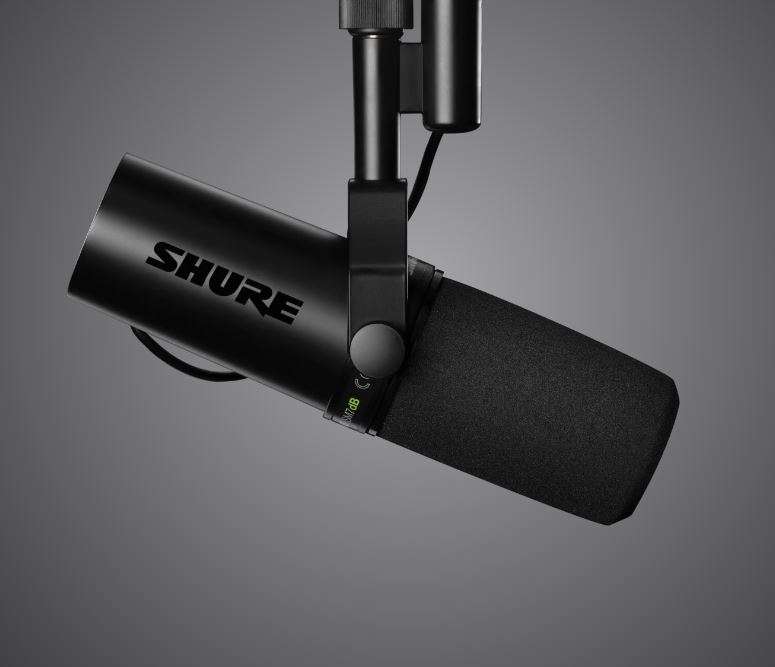
For podcast producers seeking professional-grade audio quality, the Shure SM7B and the newer SM7dB are an industry standard.
The SM7B is the same as the newer SM7dB in sound and performance. The mics differ in price and only one key feature I detail later.
To keep things simple, I’ll reference the SM7B unless there are differences.
Shure created the first version of this dynamic cardioid microphone in 1973. It has earned its reputation through decades of reliable performance in broadcast and studio environments. But is it the right choice for your podcast setup?
Sound Quality and Characteristics
The SM7B is renowned for its natural, balanced sound reproduction. It captures voices with remarkable clarity and warmth, delivering a “radio-ready” tone that many podcasters covet.
The microphone’s frequency response of 50 Hz to 20 kHz ensures it picks up the full range of human vocal frequencies, resulting in rich, full-bodied recordings.
One of the SM7B’s standout features is its versatility. While it excels at capturing spoken word for podcasts, it’s equally at home recording singing vocals or even instruments. This flexibility makes it a valuable tool for podcasters who may want to incorporate music or diverse audio elements into their shows.
The SM7B includes two built-in EQ switches on the back panel: a low-cut filter and a presence boost. These allow for some on-mic sound shaping, which can be useful in less-than-ideal recording environments or when working with different voice types.
The low-cut filter can help reduce unwanted low-frequency rumble, while the presence boost can add clarity and “air” to vocals if needed.
Design and Build Quality
Shure has a well-earned reputation for building durable gear, and the SM7B is no exception. Its all-metal construction feels substantial and robust, inspiring confidence in its longevity.
The microphone’s weight and size contribute to its professional feel, though they also mean it requires a sturdy microphone stand or boom arm for proper positioning.
The SM7B’s design incorporates an internal air suspension shock mount, which helps minimize vibrations from the stand or surrounding environment. While not a complete replacement for an external shock mount, it provides a good baseline of isolation from handling noise and low-frequency vibrations.
One of the most distinctive visual elements of the SM7B is its large, bracketed windscreen. This design serves multiple purposes.
First, it helps with plosive protection, reducing the impact of pops and bursts of air that can occur with certain consonants.
Second, it creates a natural distance between the speaker and the microphone capsule, encouraging proper mic technique.
The SM7B comes with two foam windscreens – a thinner one for general use and a thicker one for additional pop protection and slight high-frequency attenuation.
Ease of Use for Podcasters
The SM7B’s cardioid polar pattern makes it forgiving in terms of placement.
It primarily picks up sound from the front while rejecting off-axis noise (noise coming from anywhere else), which can be beneficial in untreated rooms or home studio environments.
This characteristic allows podcasters to achieve a focused, intimate sound even without extensive acoustic treatment.
Gain and the Difference between SM7B & SM7dB

However, the SM7B presents some challenges, particularly for those new to audio production.
Its low sensitivity means it requires a significant amount of gain – at least 60 dB, preferably closer to 65 dB.
You will need a high-quality preamp or audio interface capable of providing clean amplification at these levels. Many podcasters opt to use an inline preamp or “mic activator” like the Cloudlifter CL-1 to boost the signal before it reaches their main interface.
The gain requirement can be a blessing and a curse. On one hand, it means the SM7B is less likely to pick up ambient room noise, resulting in cleaner recordings.
On the other hand, it requires more expensive supporting gear and can frustrate for beginners who may not understand why they’re not getting enough signal.
Enter the SM7dB
During 2024, Shure launched the SM7dB, a new version of the mic. Shure fitted a built-in Cloudlifter to ensure plenty of gain without extra gear.
Otherwise, the newer version is exactly the same in sound and performance.
The newer SM7dB costs $100 than the older model coming in at around $500.
Yes, it’s more expensive, but the new SM7dB advantages are that:
- The in-built Cloudlifter means less equipment snarling up your desk.
- The additional power, from the built-in Cloudlifter, gives you better flexibility to finesse your gain settings to reduce the background noise captured via your mic.
- The newer mic is cheaper than buying the older SM7B and a Cloudlifter separately.
Comparative Value
$400 for the SM7B and $500 for the SM7dB represent a significant investment for many podcasters.
It’s essential to consider whether this price point aligns with your budget and needs. While it’s undoubtedly a professional-grade microphone, there are more affordable options that can also deliver excellent results.
For instance, you can purchase the Shure SM58 – a stage vocal microphone that uses a similar capsule to the SM7B – for about a quarter of the price ($100).
With proper technique and some additional accessories like a foam windscreen, the SM58 can produce results that come surprisingly close to its more expensive sibling.
The Shure MV7+ is another cheaper alternative from the same Shure stable. It’s a dynamic mic that uses both XLR or USB-C connections and costs around $280.
However, the SM7B and the newer SM7dB offer several advantages that may justify its higher price for serious podcasters including:
- Superb “broadcast” sound.
- Better off-axis rejection.
- Superior plosive protection.
- Robust build quality
- On-board EQ options.
For those running a professional podcast studio or aiming for the highest possible audio quality, these features can make a noticeable difference.
Long-term Considerations
You should treat investing in an SM7B or SM7dB as a long-term decision. Its durability means it’s likely to last for many years, potentially outliving other equipment in your studio.
Its versatility also means it can grow with your podcast, serving you well whether you’re recording solo commentary, interviewing, creating audio drama, or branching out into music production.
The SM7B’s popularity and professional status also mean it holds its value well. Should you ever decide to upgrade or change your setup, you’re likely to find a ready market of buyers for a used SM7B or SM7dB in good condition.
Conclusion
The Shure SM7B and SM7dB are top-tier microphones that live up to their reputation in the podcasting world. They deliver professional-grade audio quality, versatile performance, and robust construction.
However, its high gain requirements for the SM7B and premium price point of both mics mean they are not necessarily the best choice for everyone, especially those just starting out. Carefully consider your needs, budget, and existing equipment before making the investment.
If you are a podcaster who is serious about your craft and have the supporting equipment to make the most of it, the SM7B or SM7dB is an excellent choice that will elevate the overall quality of your production.
Pros:
- Excellent sound quality with natural, balanced voice reproduction
- Versatile performance suitable for speech, singing, and instruments
- Makes you voice sound richer and deeper.
- Durable, professional-grade construction
- Effective internal shock mounting
- Built-in pop filter and plosive protection
- On-board EQ options for sound shaping
- Good off-axis rejection for cleaner recordings
- Holds value well
Cons:
- Expensive compared to entry-level podcast microphones
- The original SM7B requires significant gain, necessitating high-quality preamps or additional equipment. (This doesn’t apply to the SM7dB)
- Large and heavy, requiring a sturdy stand or boom arm
- May be overkill for beginners or hobbyists
- Learning curve to achieve optimal results
Leave a Reply